Knowledge base
I'm Not Very Sporty or Coordinated, Will That Be A Problem?
- Martial Arts
- Beginner Martial Arts
Quick Answer
No, not being sporty or naturally coordinated will not stop you from training martial arts. Classes are designed to teach coordination through practice, not to test it. Every student, regardless of background, starts by learning the same foundational movements and builds skill gradually from there.

Written and reviewed by Gerardo Mulas
Teaching Martial Arts at 5 Elements Studio - Jiu-Jitsu & Fitness since 2020, with experience across a wide range of students and skill levels.
Some of the most dedicated martial arts students I’ve taught were never naturally athletic or coordinated when they started. With patient instruction and regular practice, I’ve watched them turn unfamiliar movements into skills they can perform with confidence — proving that progress comes from persistence, not natural talent.
Why Coordination Isn't a Prerequisite
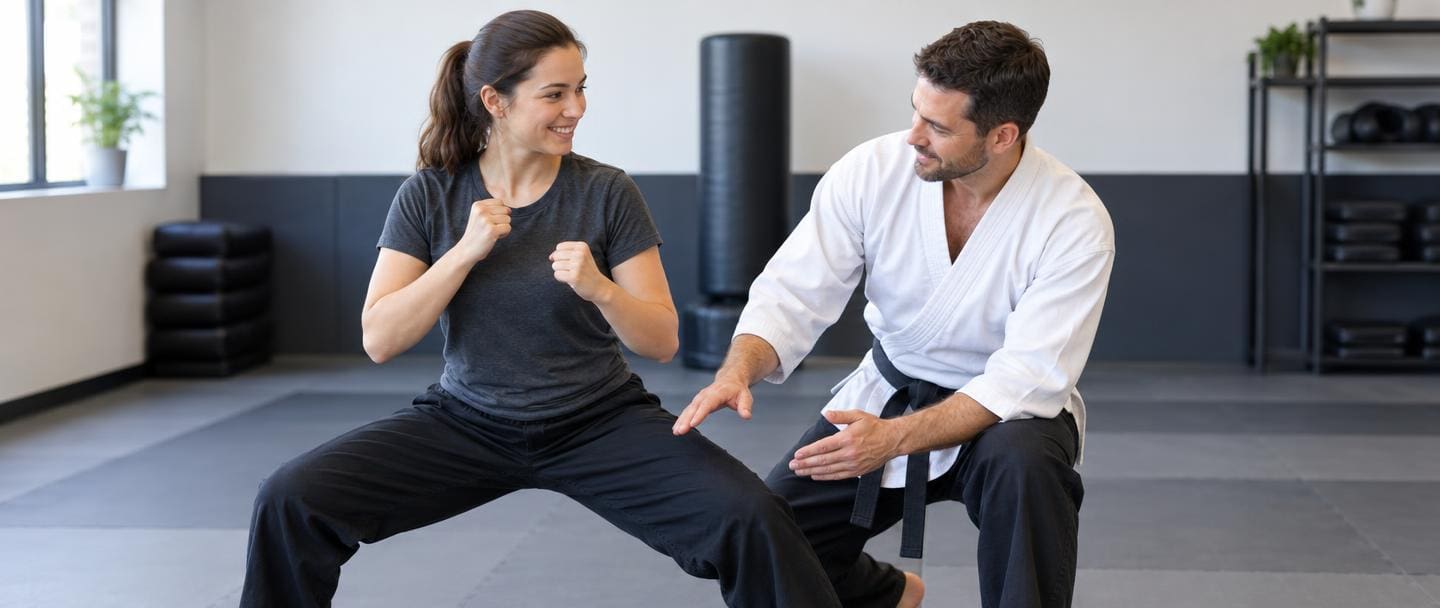
Martial arts techniques are broken down into small, teachable steps rather than expected to come naturally. Instructors demonstrate a movement, students practice it slowly, and complexity is added only once the basics feel comfortable. This step-by-step approach means students who have never played sports can learn alongside those with years of athletic experience.
How Coordination Builds Through Practice
Coordination is a skill, not a fixed trait. Repeating drills class after class trains the body to move more smoothly, and small improvements become noticeable over weeks and months of consistent attendance. Many students who felt clumsy in their first class find that footwork, balance, and timing improve simply through regular practice.
Progress Is Measured Against Yourself, Not Other Students
Classes are structured so students work at their own pace rather than being compared to one another. Grading and skill progression reflect personal improvement over time, so a student who started with little coordination can advance just as meaningfully as a naturally athletic one, simply on a different timeline.
What Matters More Than Natural Athleticism
Consistency, attention, and a willingness to keep showing up matter far more than natural ability. Instructors such as Gerardo Mulas adjust drills and corrections to suit each student, so effort and attitude carry more weight in a student’s development than how athletic they were on day one.
Confidence That Grows Alongside Skill
Many adults and parents enrolling children come in worried about looking uncoordinated in front of others. In practice, working through early awkwardness and seeing steady improvement is often where students build the most confidence, since it comes from real, earned progress rather than starting out as a natural athlete.
Related questions
What challenges might someone with poor coordination face during their first martial arts classes?
New students often mix up left and right, lose track of footwork sequences, or feel off-balance when combining arm and leg movements at the same time. Timing can also feel off at first, since reacting to a partner or following a combo takes repetition to sync up. These hurdles are common for beginners and tend to smooth out within the first several classes as the movements become familiar.
How do martial arts instructors typically break down complicated movements for beginners who find coordination difficult?
Instructors often divide a technique into smaller, manageable steps, demonstrating each part slowly before combining them into the full movement. They may also use mirrored drills, hands-on corrections, or simplified variations to help the body learn the correct pattern gradually. This step-by-step approach allows students to build muscle memory at their own pace without feeling overwhelmed.
Which beginner martial arts exercises can help improve balance, timing, and body awareness?
Simple drills like shadow practice (running through stances and strikes without a partner), slow-motion repetition of a single technique, and basic footwork patterns such as shuffling or pivoting are common ways beginners build body awareness. Balance-focused exercises, like holding a stance on one leg or practicing controlled weight shifts, also help. These are typically introduced gradually and don’t require prior athletic ability.
How can beginners measure their coordination improvements without comparing themselves to more experienced students?
The best way is to track personal progress rather than rank against others. Notice if movements feel smoother, transitions happen faster, or balance holds steadier than they did weeks earlier. Journaling small wins or reviewing old training notes often reveals growth that daily practice can make easy to overlook.
What can someone practise at home to become more comfortable with martial arts movements between classes?
Reviewing stances, strikes, or footwork shown in class through slow, deliberate shadow practice can reinforce what was learned without needing a partner. Basic balance exercises, like standing on one leg for a count or practicing weight shifts, also help build body awareness between sessions. Mentally walking through a sequence can be just as useful as physically repeating it.
Other resources you may like
Start Where You Are
You Don't Need to Be Athletic to Begin, You Just Need to Start
- Last updated: 23 October 2026